We’ve all been there: a great idea hits while you’re driving, walking the dog, or halfway through cooking dinner, and there’s no time to grab a notebook. So you either lose the thought completely, or you fumble to type it out one-handed while trying not to walk into a lamp post.
This is the exact problem that’s pushed so many people to rethink how they take notes in the first place. For decades, writing things down was the only option. Now, voice notes have become a serious contender. But which one is actually better for productivity – talking or typing?
The honest answer is: it depends on what you’re trying to capture, and how your brain works best. Let’s break it down.
The Case for Written Notes
Writing has been the default for so long because it works, at least in certain situations.
Pros of written notes:
- Easy to skim and scan visually
- Naturally structured (bullet points, headers, lists)
- Great for information you need to reference precisely, like phone numbers or addresses
- No background noise or mumbling to worry about
Cons of written notes:
- Slower than speaking, especially for longer thoughts
- Requires your hands and full attention, which isn’t always available
- Easy to lose momentum on an idea while you’re busy formatting it
- Not practical while driving, exercising, or multitasking
Written notes shine when you need something clean, structured, and quick to reference later, like a grocery list or a short reminder. But they start to break down the moment your thoughts move faster than your fingers can type.
The Case for Voice Notes
Voice notes solve a very specific problem: capturing thoughts the moment they happen, without friction.
Pros of voice notes:
- Much faster than typing, especially for longer or more complex thoughts
- Hands-free, so you can record while driving, walking, or working
- Captures tone, emphasis, and nuance that text can lose
- Great for brainstorming, since talking often leads to more natural, free-flowing thinking
Cons of voice notes:
- Traditionally hard to search through, especially in long recordings
- Not ideal for information you need to visually scan later
- Can feel awkward to record in public settings
- Old-school voice memo apps leave you replaying entire recordings just to find one idea
That last point used to be the biggest reason people avoided voice notes altogether. Recording an idea was fast, but finding it again later meant sitting through minutes of rambling just to locate the one useful sentence. That friction alone was enough to push people back to typing.
So Which One Actually Boosts Productivity?
Here’s the honest truth: the best note-taking method isn’t voice or written. It’s whichever one removes the most friction between having a thought and capturing it.
For quick reminders, checklists, or anything you’ll need to visually scan, writing still works well. But for capturing ideas, meeting notes, or anything you need to think out loud to figure out, voice notes tend to win, especially when speed matters more than structure.
The real breakthrough happens when you combine the speed of speaking with the searchability of text. That’s what modern voice-to-text tools are designed to solve.
Getting the Best of Both Worlds
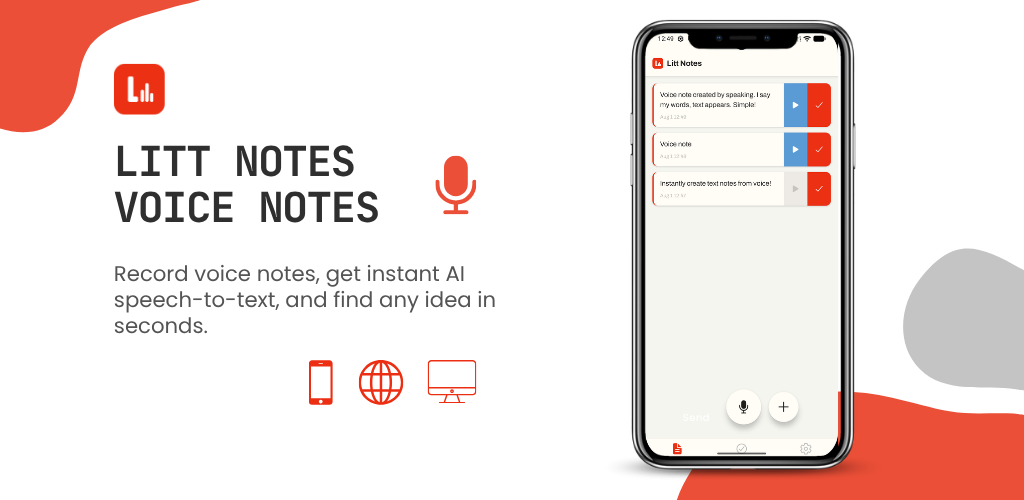
This is exactly where apps like Litt Notes come in. Instead of choosing between speaking your thoughts or writing them down, Litt Notes lets you do both at once. You record a voice note the moment an idea hits, and it’s automatically transcribed into readable, searchable text.
That means no more replaying a five-minute voice memo just to find the one idea you actually needed. You get the speed of voice notes with the organization and searchability of written ones, all in one simple, lightweight app that syncs across your devices.
Whether you’re capturing a business idea on a walk, jotting down meeting notes, journaling before bed, or just trying to remember what you needed at the grocery store, the goal is the same: get the thought out of your head and into a place where you can actually find it again.
Final Thoughts
Voice notes and written notes both have their place, but they don’t have to be an either-or decision anymore. The most productive approach is capturing ideas the moment they happen, in whatever format is fastest in that moment, and having them automatically organized so you never have to dig through old recordings again.
If you’re tired of choosing between speaking fast and staying organized, it might be time to try a tool that does both.
Try it for yourself
Litt Notes records your voice and transcribes it to searchable text on your device, so you get the speed of speaking and the searchability of writing in the same note. It’s launching soon.
Leave a Reply